
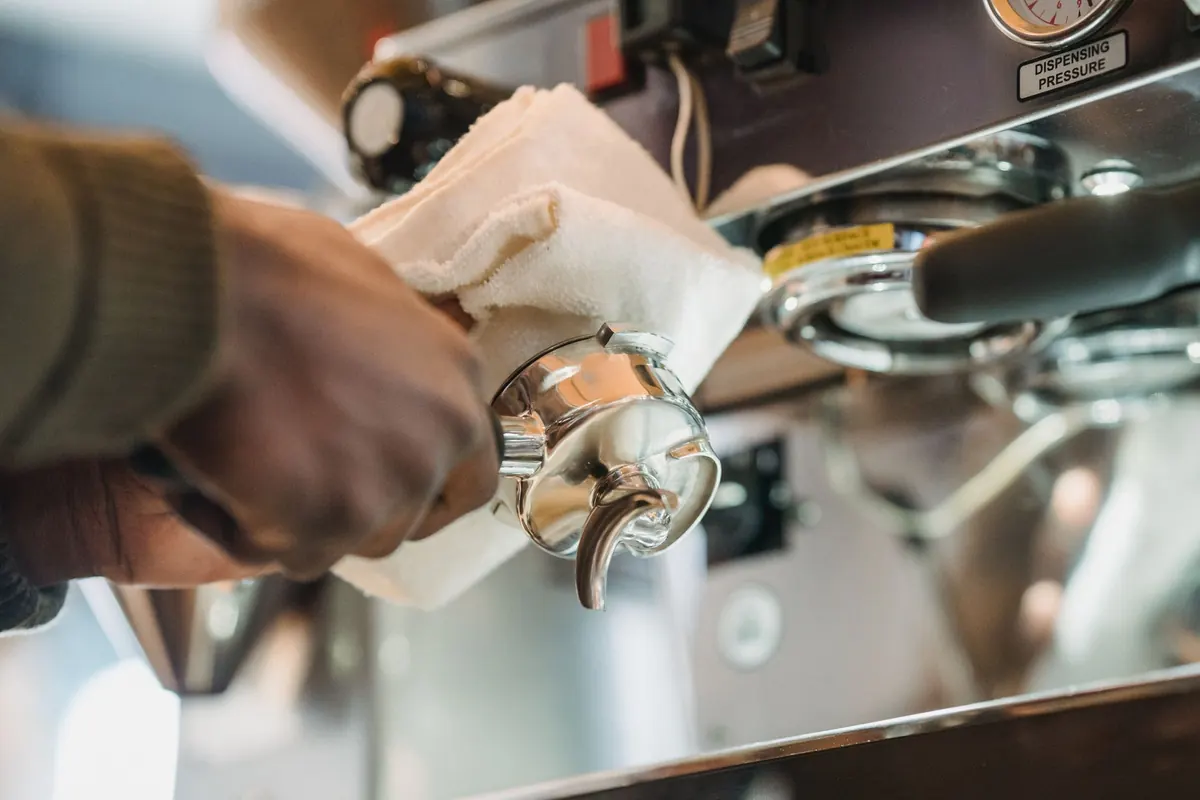



You buy good beans. You weigh them. You've dialed in the grind and you're using decent water. And then, three weeks later, the coffee tastes flat — slightly bitter in a way that isn't the bean's fault. More often than not, the culprit is old oils and mineral scale hiding in the gear you use every morning. Cleaning coffee equipment isn't glamorous, but it's the cheapest upgrade available to your cup. Here's a schedule that fits into a normal week.
Why Residue Ruins a Good Cup
Coffee leaves behind two things: oils from the bean and minerals from the water. Oils go rancid. Scale builds up. Both are largely invisible if you aren't looking for them.
Rancid oils in a grinder or a French press mesh make every later brew taste stale, because you're essentially re-brewing yesterday's coffee along with today's. Scale in a kettle or a brewer's heating element does something subtler: it insulates the water from the heat source, so your brew temperature drops. A pour-over that used to hit the right temperature starts coming out under-extracted and sour.
The fix isn't a marathon scrub. It's frequency. Small cleanings done often beat big cleanings done rarely, and they take far less time than most people assume.
The Daily Reset (About 60 Seconds)
Do these before you leave the kitchen. They cost almost nothing and they prevent most of the mess that makes deeper cleaning miserable.
- Rinse your mug with hot water immediately. Coffee film sets as it dries. A five-second rinse now beats a two-minute scrub tomorrow.
- Knock out and rinse the portafilter basket if you pull espresso, and wipe the shower screen with a damp cloth after the last shot.
- Empty the drip tray and dump the grounds bin. Wet grounds grow mold faster than you'd expect, especially in humid weather.
- Pour out leftover water in the kettle. Standing water is what leaves mineral deposits behind.
If you only do one thing, make it the mug and the basket. Those two touch your coffee most directly.
The Weekly Checklist
Pick a day — Sunday evening works well for most people — and spend fifteen minutes. Put on something to listen to. This is the maintenance that keeps everything else easy.
Grinder
Unplug it first, always. Empty any remaining beans into an airtight container; don't leave them in the hopper overnight anyway, since they stale faster there than in a sealed bag.
Brush out the burr chamber with a stiff-bristled brush or the one that came with the grinder. A hand blower helps move fines out of the chute. Wipe the hopper with a dry or barely damp cloth and let it dry completely before reassembling.
Skip the old trick of grinding uncooked rice to clean the burrs. Rice is harder than most burr steel and can dull or chip the edges. If you want a deeper clean, use cleaning tablets made for grinders — and check your manufacturer's guidance first, since some burr sets shouldn't be run with them at all.
Brewers
The right method depends on what you're brewing with.
- Drip machine: Run a cycle with equal parts white vinegar and water, then two or three full cycles with clean water. Wash the carafe and filter basket by hand.
- French press: Fully disassemble the plunger. Rinse the mesh and spring under running water, then soak the pieces in warm soapy water for a few minutes. A soft brush gets oils out of the mesh.
- Pour-over: Wash the cone or dripper in hot soapy water. Ceramic and glass are dishwasher-safe; most plastic is too, but check. For reusable metal or cloth filters, rinse with hot water and let them dry completely before storing.
- Espresso machine: Backflush with water if your machine supports it. Wipe the group head gasket with a damp cloth and brush the screen.
Kettle
Look inside. If you see chalky white patches, that's scale, and it's already affecting how your water heats. A weekly rinse won't remove it, but a weekly check tells you when it's time for the monthly descale.
Wipe the exterior with a damp cloth — never submerge an electric kettle — and dry the base contacts if any water got near them.
One useful habit: keep your coffee gear in one spot, with its brush and cloth nearby. Cleaning you can reach gets done.
The Monthly Deep Clean
Once a month, set aside half an hour and go deeper.
Descale the kettle and any water-heating brewer
Fill with a solution of one part white vinegar to one part water, or use citric acid powder according to its package directions. Bring it to a boil, let it sit for twenty to thirty minutes, then pour it out. Boil fresh water twice and discard both rounds. If your kettle has an exposed metal element, citric acid tends to be gentler than vinegar. Don't use vinegar on aluminum parts — it pits the surface.
The same solution works for drip machines, though you run it through a brew cycle instead of boiling it. Rinse thoroughly; leftover acid makes the next pot taste sour.
Grinder burr removal
Many grinders let you remove the upper burr assembly without tools. If yours does, take it out, brush both burrs, and vacuum the chamber with a crevice attachment. Don't wash burrs with water — moisture is the enemy of steel. If disassembly looks complicated or voids your warranty, stick to brushing.
Espresso machine
Backflush with a dedicated espresso cleaning powder, following the machine's instructions, and soak the portafilter basket and screen in hot water with cleaner. Rinse everything well before your next shot.
Supplies Worth Keeping on Hand
- A stiff-bristled grinder brush and a small hand blower
- White vinegar or citric acid powder
- Espresso cleaning powder and, if needed, a blind basket
- Grinder cleaning tablets
- A couple of microfiber cloths reserved for coffee gear
Make It a Rhythm, Not a Chore
The point of a checklist isn't perfection. It's consistency. A daily rinse, a weekly fifteen minutes, and a deeper session once a month will keep your equipment running longer and your coffee tasting the way it did the day you dialed it in.
If you're not sure whether it's time to clean, trust your palate. A cup that suddenly tastes flat, bitter, or oddly muted is usually telling you exactly what to do.
Photo: Mizuno K / Pexels
Related posts
More stories you’ll love reading