




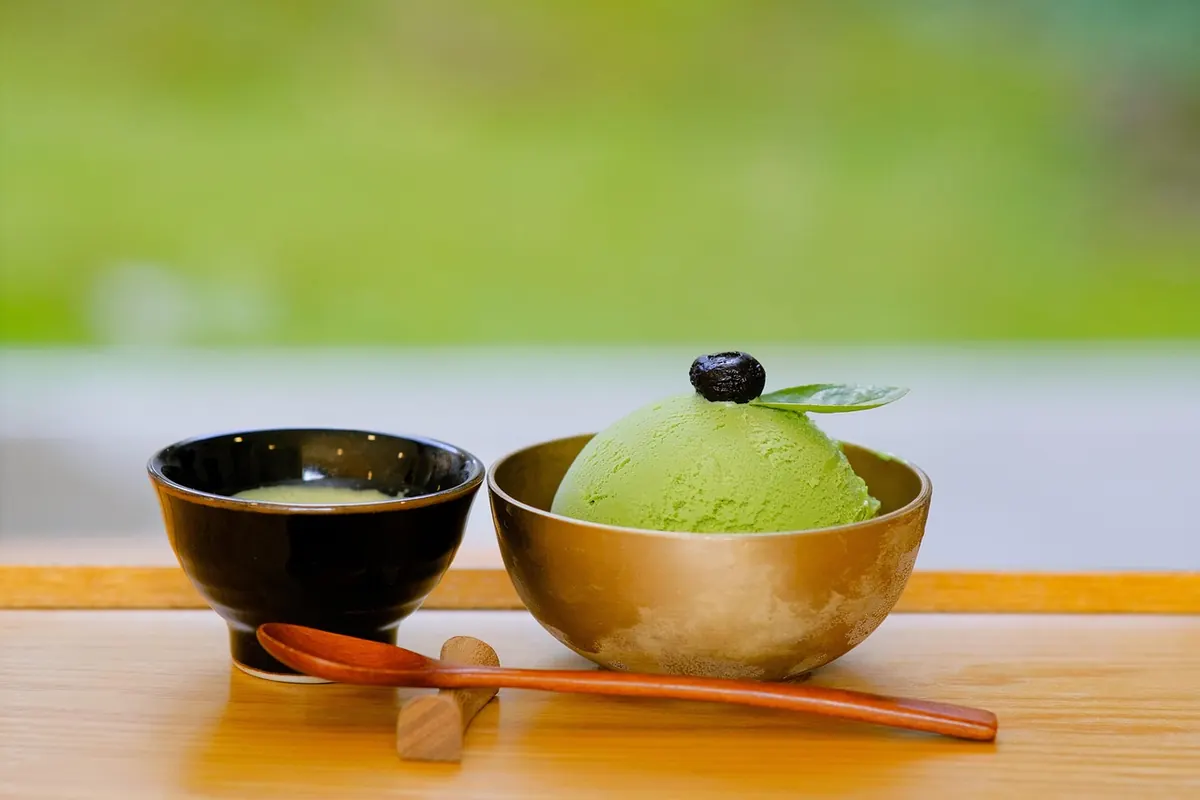
Matcha is not hard to make. It is just specific. Almost every disappointing bowl — the one with a bitter edge and a chalky green layer at the bottom — comes down to three small things: powder that never got sifted, water that was too hot, and a whisk that never really got moving. Get those right and the same tin of matcha suddenly tastes sweet, grassy, and surprisingly creamy. No barista training required.
Start With the Right Tools (and Skip the Rest)
You need four things, and only two of them are non-negotiable.
- A wide bowl. A small mug traps the whisk and splashes everywhere. Something 10–12 cm across with straight-ish sides gives you room to move.
- A bamboo whisk (chasen). The hundred-odd flexible tines are what create foam. A metal whisk or a milk frother will mix the powder but won't build the same fine, dense crema.
- A fine-mesh sieve. A small tea strainer works fine. This is the single tool that prevents most clumps.
- A scoop or a measuring spoon. A bamboo scoop (chashaku) is traditional, but a level teaspoon is close enough to start.
Skip the whisk stand, the special resting mat, and the expensive ceremonial set until you know you'll use it. A cereal bowl and a kitchen strainer will get you a decent first cup.
Sift the Matcha — Every Single Time
Matcha is milled finer than flour, which means it clumps on its own from static and from any moisture in the air. Those clumps don't dissolve in water. They just sink, then stick to the bottom of the bowl and to your tongue.
Set your sieve over the bowl, add the matcha, and press it through with the back of a spoon. Ten seconds, and the powder falls into the bowl like green snow. Do this right before you whisk — not for the whole week. Pre-sifted matcha sitting in a tin picks up odors and loses its brightness fast.
If you don't have a sieve
Put the matcha in the bowl, add a teaspoon of water, and work it into a smooth paste with the back of a spoon, pressing out the lumps against the side. Then add the rest of the water. It's less elegant than sifting, but it works.
Get the Water Temperature Right
Boiling water is the fastest way to ruin matcha. It pulls out bitterness and flattens the sweetness. Aim for roughly 70–80°C (160–175°F) — hot enough to dissolve the powder, cool enough to stay gentle.
No thermometer? Boil the kettle, then let it sit with the lid open for three to four minutes. Or pour the water back and forth between two cups a few times. Either gets you close.
For a standard bowl of thin matcha (usucha), use about one level teaspoon of powder — roughly 2 grams — to 60–70 ml of water. That's a small amount of liquid; a full mug will taste thin and watery. If you want a latte, use culinary-grade matcha, whisk it with a small amount of hot water first, then add warm milk. If you want the thick, almost paint-like version (koicha), use double the powder and half the water, and whisk slowly rather than frothy.
The Whisking Motion That Actually Works
Here's where most people go wrong: they whisk in circles. Circular whisking just spins the liquid around the bowl. Matcha needs back-and-forth agitation to break up the particles and pull air into the surface.
- Hold the bowl steady with your non-dominant hand, fingers over the rim.
- Hold the chasen lightly, the way you'd hold a pencil you weren't writing with. A death grip wears out your wrist and crushes the tines.
- Move the whisk in a fast zigzag — think of tracing a W or M across the bottom of the bowl — driven from the wrist, not the elbow.
- Keep the tips near the bottom but don't grind them against it. You want them springing, not scraping.
- Whisk for 15–25 seconds, until a fine, even foam covers the surface and no dry powder clings to the sides.
- Finish by lifting the whisk slowly through the center, which leaves a soft peak.
Speed matters more than force. A quick, light zigzag for twenty seconds beats a hard, slow stir for two minutes.
Troubleshooting: Clumps, Bitterness, and Flat Foam
- Clumps at the bottom. You skipped the sift, or the water was too cool to dissolve the powder.
- Chalky, gritty texture. Usually culinary-grade matcha being drunk straight, or powder that's been open too long.
- Bitter, drying finish. Water too hot, too much powder for the amount of water, or an older tin.
- Thin foam that vanishes. The whisk moved too slowly, or the tines have splayed and lost their spring. A chasen does wear out.
- Flat, dusty flavor. Stale matcha. Bright, sweet-smelling powder is fresh; dull yellow-green powder that smells like hay is not.
Buying and Storing It Without Overthinking
Ceremonial grade is meant for drinking with water. Culinary grade is cheaper, more bitter, and perfectly good in lattes, smoothies, and baked goods. Buy small tins rather than a big one; matcha fades within weeks of opening, not months.
Store it airtight, away from light and heat, and as far as possible from coffee beans and spices — matcha absorbs surrounding smells with alarming speed. The fridge works if the tin is truly sealed, but let it come to room temperature before opening so condensation doesn't get inside.
A Two-Minute Practice
Sift a teaspoon of matcha into a wide bowl. Heat water to about 75°C, or boil and wait four minutes. Pour in 60 ml. Whisk in a fast zigzag for twenty seconds and drink it while the foam is still standing.
That's the whole method. Do it three or four mornings in a row and the motion becomes automatic — you'll feel the difference between a bowl that's been whisked enough and one that hasn't. One note: matcha contains caffeine, so if you're sensitive or pregnant, keep it to the morning or check with a healthcare professional about what's right for you.
Photo: thaoantran0101 / Pixabay
Related posts
More stories you’ll love reading